My Store
Parkia Biglandulosa Chanduphal Plant
Parkia Biglandulosa Chanduphal Plant
Couldn't load pickup availability
African Locust Tree
Family
Mimosaceae
Origin
Indian Subcontinent
Description
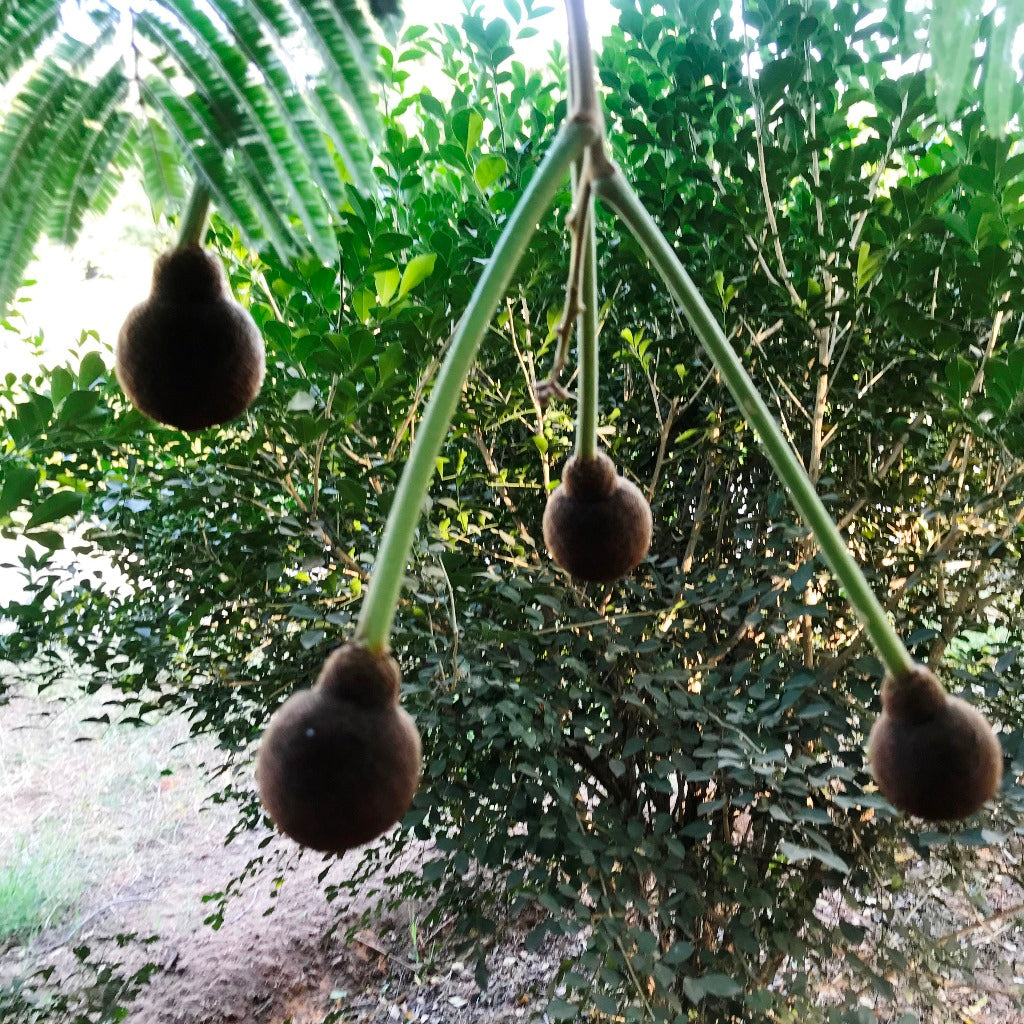
Parkia biglobosa, also known as the African locust bean, is a perennial deciduous tree . It is found in a wide range of environments and is primarily grown for its pods that contain both a sweet pulp and valuable seeds. Parkia can grow into a large tree indeed with many spreading branches. The leaves are fine and feathery. The inflorescence, which happens in December-January is similar to a Badminton Ball hanging at the tip of a long thick stalk - the reason for its common name.
In the winter season, 1 - 2 ft branches, hanging from the leaf axil, bear rust coloured bead-like flower heads, which gradually gain size of a tennis ball - and the "flowers" bloom to spectacular white electric bulbs! The flowers in round white heads are prominent, hence the native name 'Chendul' , or ball. Leaves bipinnate with very numerous leaflets; rachis of leaf downy, 1 ft. of more long; pinnae 20-30 pair, 60 to 100 pairs leaflets, rigid, 1/4 in. long.
As a standing tree, locust bean may have a positive effect on the yield of other nearby crops.
Environment
Chanduphal prefers full sunlight and moderate watering. It grows well with Dry Soils / Drought, Well-Drained Soils, Fertile Loamy Soils.
Landscape Uses
African locust tree is commonly used as an ornamental tree